
Do You Need Your Wedding Photographer for the Last Hour of the Reception?
11/16/2026
Questions for Wedding Photographers
11/27/2026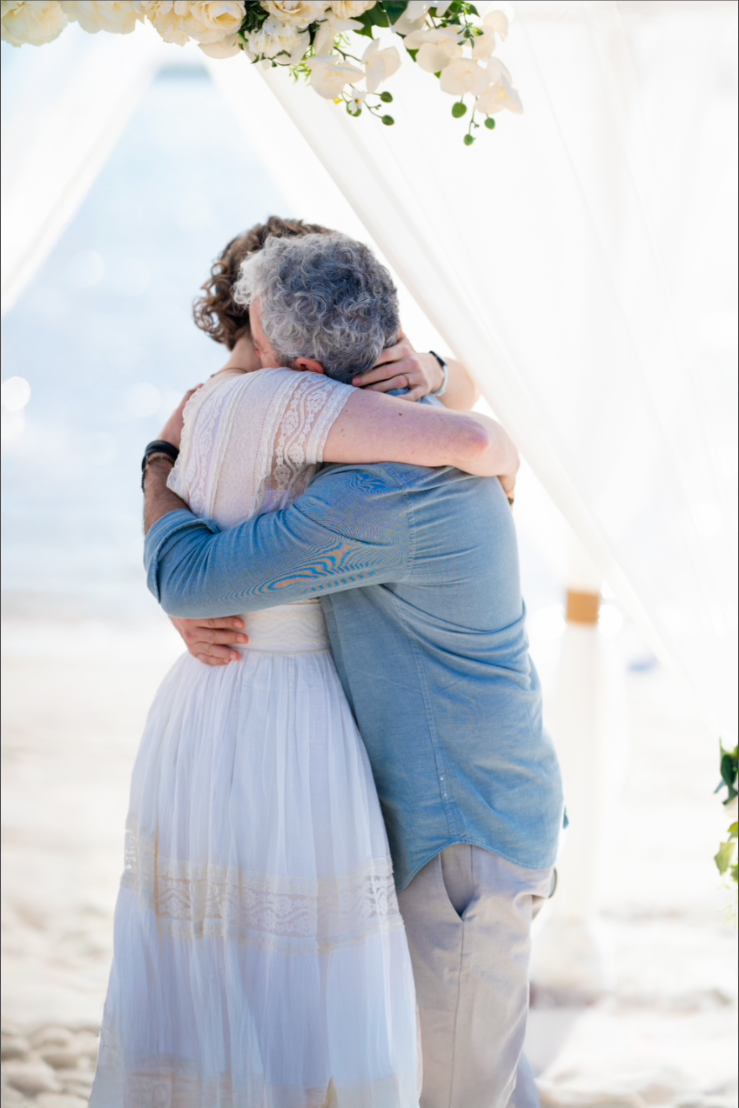
Here is a problem most grooms never see coming. When couples plan what to wear on the wedding day, groom wedding attire advice covers fit, color, and style. It almost never mentions this.
You buy a shirt that looks sharp in the store. In the mirror it looks clean, fine, and perfect for the wedding day. Then you see the wedding photos, and that same shirt has strange waves moving across it. In some photos it even shows colors that were never on the shirt at all.
That is the moire effect. I call it one nightmare for photographers, because by the time you see it on the wedding day, it is almost too late to do anything real about it.
The good news is simple. This is one of the easiest wedding photo problems to prevent, and it costs nothing to check. You just have to know about it before you buy the shirt.
What the moire effect actually is
Your eye and a camera do not see a fine pattern the same way.
A shirt with very fine stripes, tiny checks, or a tight woven pattern has thousands of small lines close together. A camera sensor records the world through millions of tiny dots called pixels, lined up in a fine, even grid. When the lines on the cloth are finer than the pixels can separate, the two patterns fight each other, and the camera reads the cloth wrong. The sharper and clearer the image, the stronger those fine lines arrive, and the more likely the clash is to show.
The result is a new pattern that was not there in real life. Wavy lines. Ripples that seem to move when you zoom in or out. Sometimes a soft rainbow shine across the fabric.
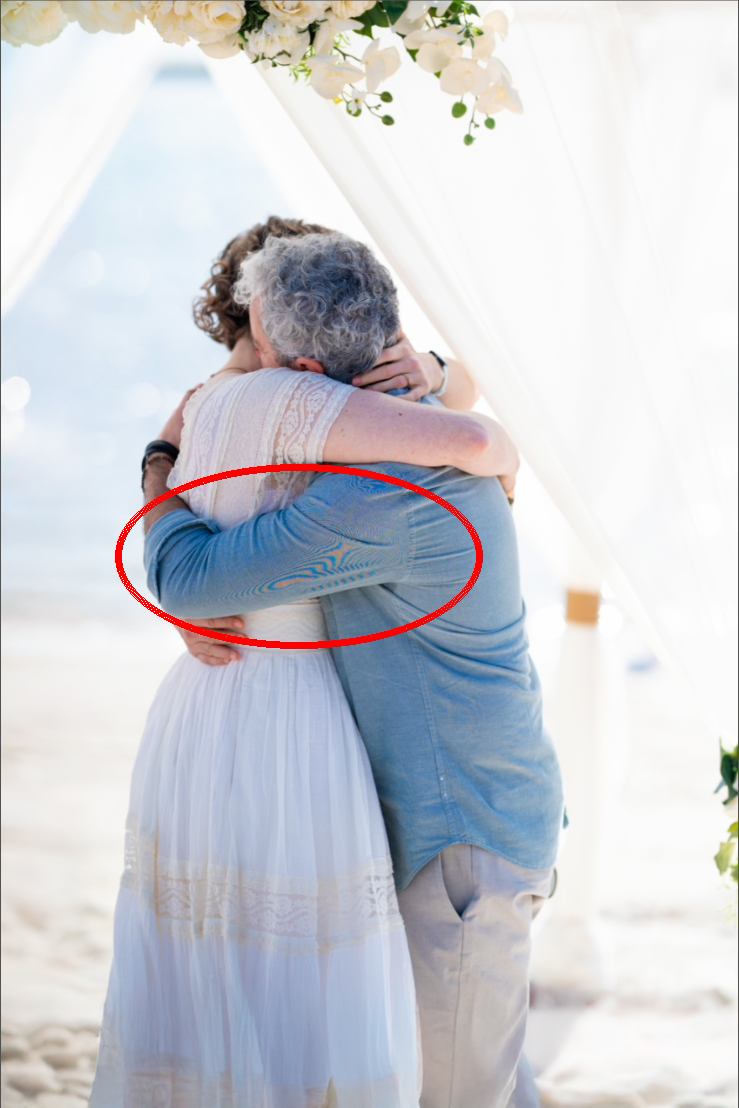
The shirt is not damaged. The camera is not broken. It is simply what happens when a pattern is too fine for the camera to record cleanly.
That is also why it can be so confusing. The shirt may look fine in one photo and bad in the next. Move a step closer, change the angle, or make the photo smaller on a phone, and the waves can get stronger or weaker.
Why a wedding day is the worst place to discover it
A groom is not in a few photos. He is in almost every important part of the day.
Getting ready. The first look. The ceremony. Family photos. Formal portraits. The walk back down the aisle. If the shirt creates moire, it does not spoil one picture. It can follow him through the whole gallery.
Weddings also give this problem plenty of chances to show up. In my work I guide couples through sequences, small movements you do together, instead of freezing you in stiff poses. You get guided poses to start, then natural poses as you relax, and formal portraits when we need them. That means the groom is photographed from different distances, in different light, all day long.
I deliver photos in full, true color, the way the day really looked. False color from moire works against that. It puts colors on a shirt that were never there.
Why editing cannot fully save it
Couples sometimes ask, can you just fix that in editing?
I wish the answer were yes. It is not.
In Lightroom and other editing software there are tools that can soften moire. Used carefully, they can make it less noticeable in some photos. Less noticeable is not the same as gone.
Push the tool too far and the fabric starts to look soft and strange, and the color waves do not always leave completely, especially when the pattern is strong across a large part of the photo. Sometimes the pattern is simply too strong, and no tool takes it fully away.
Then there is time. A wedding gallery holds hundreds of photos, and there is no one fix that works on all of them at once. The pattern lands in a different area in every photo, so each photo has to be treated separately, by hand, with a brush, area by area. That makes the photographer work harder and longer on every single photo, when that time should go to the color, the light, and the moments of your day.
Prevention takes two minutes in a store. Editing takes hours, and it still only fixes it slightly. That is why this talk has to happen before the wedding, not after it.
The simple test to do before you buy the shirt
Do this in the store, before you pay. It is the advice I give every groom who will listen.
- Ask a specialist about the pattern. A good professional store that sells men’s wedding clothing knows this problem. Ask them directly how the fabric behaves on a camera sensor, because the sensor is what creates these patterns when it meets a fine pattern on the cloth. They can tell you if a fabric is known to photograph badly, and that is one more reason to buy your wedding clothes from a professional store like that instead of guessing on your own.
- Take a test photo with a camera. Use the best camera you have with you, even a phone is better than no test at all.
- Take that photo from a few distances. One close, one from a few steps back, and one wider, the way a formal portrait would be framed.
- Zoom in on the shirt in each photo, then zoom back out and look at it small. Watch for waves, ripples, or colors that are not on the real shirt.
- Move slightly and take one more. Moire can appear and disappear with distance and angle, so one clean photo does not clear the shirt.
- If you see the waves in the test, choose a different shirt while choosing is still free.
If you have already booked your photographer, ask him about it. This is one of the reasons it helps to ask questions before booking and to keep talking after you book. A short conversation about a shirt can save a whole gallery of frustration.
Which patterns are risky, and which are safer
You do not have to give up style. You only have to give the camera a pattern it can record.
Patterns that deserve a test every time:
- Very fine stripes, close together
- Tiny checks or a small grid pattern
- Tight herringbone or another small repeating weave
- Fine fabric that shines a little and changes with the light
- The same fine pattern on a tie, vest, or jacket, not only on the shirt
Safer choices are usually simpler. A solid shirt is the safest of all. A pattern that is larger and easy to see with your eye at arm length is usually easier for a camera too. Texture that you can feel more than count tends to photograph cleaner than thousands of tiny lines.
Check the whole wedding party while you are at it. Groomsmen in matching fine patterns can bring the same problem into every group photo. One shirt is a problem in portraits. Five matching shirts are a problem in the family photos and the wedding party photos too.
It is not only the shirt. The jacket counts too
Many grooms test the shirt and forget the jacket. That is a mistake, because in most wedding photos the jacket of the groom suit covers more of you than the shirt does.
A jacket can create the same moire. The risky ones are pinstripe suits, fine herringbone, houndstooth, small plaid, birdseye weave, and tight tweed. They look classic in the store, and in person they are. The problem is only on camera. A grey tweed jacket, for example, can come back in photos with patches of color that were never in the cloth.
It often shows worst in the photos couples care about most. In full length portraits and group photos the cloth sits smaller in the frame, and that is exactly where the waves and false colors get stronger.
So test the whole outfit together, shirt, jacket, vest, and tie, not one piece at a time. A tie with a tiny repeating print is small, but it sits right at the center of every close portrait. Matte fabric is safer than shiny fabric. A solid jacket, or a pattern that is broad and low in contrast, photographs clean and still looks sharp in person.
If you already bought the shirt
Do not panic, and do not wait for the wedding morning to mention it.
Tell your wedding photographer early. Send him a clear photo of the shirt, or bring the shirt question to your engagement session or a talk before the wedding. If you started your search with photographer near me, remember that photographers travel across Miami and South Florida, so that planning talk can happen in person.
On the day, a photographer can sometimes lessen moire by changing his distance, his angle, or his framing for some shots. Those are real tools, but they are limits, not cures. He cannot change distance and angle for the ceremony, the family line, and every candid moment without changing the photos themselves.
The strongest backup is simple. Bring a solid spare shirt that fits well and that you like. If the test on the wedding morning shows a problem, you have a clean choice ready, and the day keeps moving without stress.
A small check that protects a big day
No couple plans to spend money on a shirt that fights the camera. This problem sneaks in because the shirt looks good everywhere except in a photo.
So treat the shirt the way you treat the rings, the timeline, and the venue. Check it early. Ask the store. Take the test photo. Tell your photographer what you found.
Connection with your photographer matters here too. You want someone you can ask a small question like this, months before the wedding, and get a straight answer. That is how small problems stay small.
Two minutes with a camera in a store can protect your getting ready photos, your first look, your formal portraits, and every family photo you will hand down.
Planning your wedding in Miami or South Florida?
Tell me your date and your venue, and I will check availability and build your quote. Pricing depends on the information we gather from you. Use the contact form on the website for a quote for your date.